BigBangKitchen

.. fusion of food & science …


Leave a comment >

Yes, already mid-February! It can be a good time for a check-in to see how we are doing or even re-setting ourselves if need be too! So as this year is a year towards wellness, I noticed something interesting and relevant in my last reading of one of my favourite magazines: Success Magazine, February 2013 issue.

What I found to be of interest and also relevant, be it for making time for us as this could be near that time of the year where we are being healthy yet are stressing that the gains are not as big as we would like them to be, or conversely on the other side of the coin where we are still catching up from the holiday season just 8ish weeks ago! The interesting article was from Dr. Oz and Dr. Roizen entitled “Take a Deep Breath”. In this article there great suggestions about lifestyle tips for managing stress. The one that I really liked whats about vitamins and minerals that can help with stress. Those that were mentioned in the article are foods that contain the specific vitamins and minerlas. Those foods are:

  • avocados, any type of berry, nuts (watch out for allergies), oranges, and salmon

With these foods listed, check out the next few posts starting next week for recipes with these foods!

Happy kitchening, cooking & cuisine!

Leave a comment >

Most of the time we may think of beef as one of our chief sources of protein. Yes it is a source of protein, yet so is lamb, chicken, turkey, venison, fish, and even the popular hot greek-style yogurt!

So why is there such a fuss about protein anyways? Here is a little more of the science behind protein and what contribution it makes for us and our health:

  • repairs and rebuilds worn out cells
  • protein makes the collagen that is needed to rejuvenate our hair, skin, and nails
  • keeps the bones and muscles continually renewed

A few other protein sources include kefir, eggs, and goat cheese.

Happy kitchening, cooking & cuisine!


Leave a comment >

How long have onions been around for? If you know or want to have an educated guess, let me know in the comments section, I am interested in hearing what people say!

Aside from how long have they been around, how many ways are onions available? Let me know about that as well!

As fall begins to be in bloom, there are colours to be seen and in the onion world, there are also a few different colours pending where you are in the world. Where I am at, I typically see the yellow onion, white onion, red onion and also the green onion.

So why highlight the onion? Just to go over a little science about the onion and also provide some insight on how the onion is a key vegetable in assisting in overall health. First the science: the onion is a member of the allium family (garlic, leeks) and are used often under the school microscopes in plant biology for the visible cellulose structure they posses. From the school labs and moving on up, the onion contains sulfur (allyl sulfides) which have been shown to help in lowering blood pressure and contribute towards preventing the growth of tumors. Here is a few more magical properties of the onion:

  • high in quercetin (excellent antioxidant & antihistamine)
  • contains vitamin C, vitamin B6, calcium, potassium and phosphorus (for health hearts)
  • reduces risk of osteoporosis as helps to reduce/eliminate osteoclasts (cells that break down bone)

In summary, the onions have a history of being high in minerals and vitamins that make them valued for anti-inflammation healing as well as antiaging and long health life!

Happy kitchening, cooking & cuisine!


Leave a comment >

Just a quick “for your info” or “did you know” …

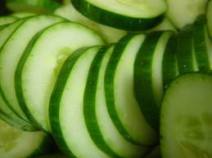
The cucumber. What do you know about this vegetable?

Could it be used to assist for helping to manage medical conditions?

What about using cucumber as a form of a spa treatment?

Well, the cucumber is a versatile vegetable! For example, because of its high water content the cucumber can be viewed as a hydrating food that helps minimize dryness and wrinkling of the skin and assists to remove toxins that can age us! How cool!

An interesting fact: the cucumber is a recommended food in the program DASH (Dietary Approaches to Stop Hypertension) because the cucumber is rich in potassium, magnesium, and fiber so it naturally helps to reduce high blood pressure by contributing to balance the fluid in the body.

Spa-wise, well the cucumber is sometimes used as an ingredient for the rejuvenating face mask with another natural wonder – the avocado.

Here is some information about the properties of a cucumber (1 cup):

* 16 calories per cup, 0.11 g total fat, 0.65 g protein, 3.63 g carbohydrate, 0.5 g fiber

* Potassium 147 mg

* Magnesium 13 mg

* Vitamin C 2.8 mg

* Vitamin B5 0.26 mg

Stay tuned for the first recipe featuring the versatile cucumber!

Happy kitchening & cooking!